








Sustainability is a complex, global topic with its own language, acronyms and frameworks. In particular, it can cause confusion when applied to business growth. For some, sustainable business growth is all about sustained profit growth. For others, it is about growing without harming the environment. To others, it is about making social progress with, for example, a more ethical approach to business. To help understand the dimensions of sustainable growth, I developed The 8P Model of Sustainable Business Growth. In this post, I will explain it and how it can be used to help your business (or organization) get on a better growth path.
The background
My company, Market2Win Ltd, builds simulations to help people learn how to grow a business. These are used at universities and companies to teach growth strategy. In 2020, I was asked by a UK university to build a simulation that would teach sustainability. I set about doing this for current and future business leaders. The objective was therefore to build a simulation that would teach sustainable business growth.
From my desk research, supervision of dissertations on the subject at Warwick University, conducting webinars with industry professionals and conversations with academics, industry leaders, sustainability experts & consultants, an overall framework was developed. Initially, this was a 5P Model, but over time, it was extended to an 8P Model. This model is now incorporated into the heart of our Sustain2Win simulation and is used by universities to teach the subject.
It will help you gain a comprehensive, holistic understanding of sustainability, from a micro business perspective, rather than a macro country perspective. Any area of sustainability can be placed somewhere on the model and it will help you to:
Using a tree for the model
The model is depicted by using a tree. Why use a tree? Sustainability requires a rethink of how businesses operate. We need a model to help explain how a business can operate in harmony with nature, rather than against it. It also needs to cover the complexity of achieving sustainable business growth. Trees are also a great analogy to businesses. They:
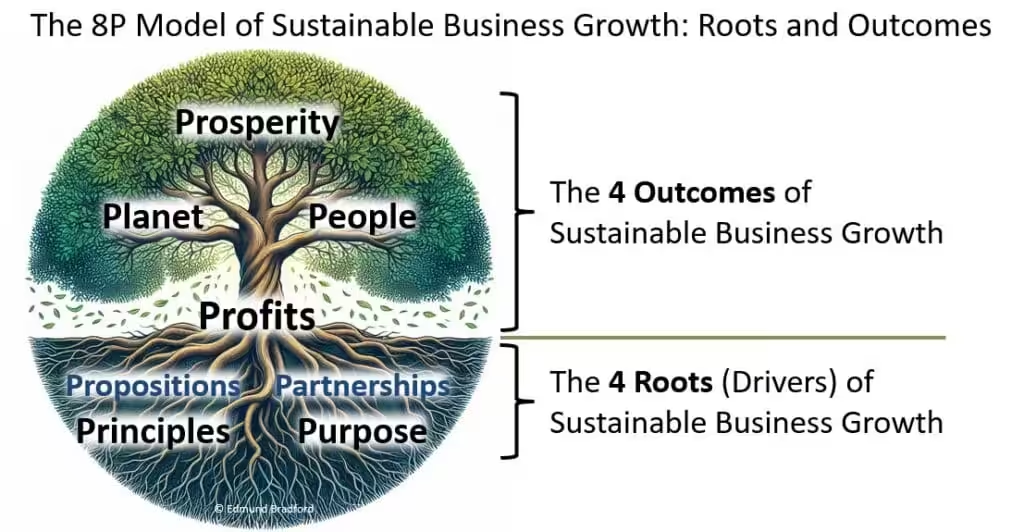
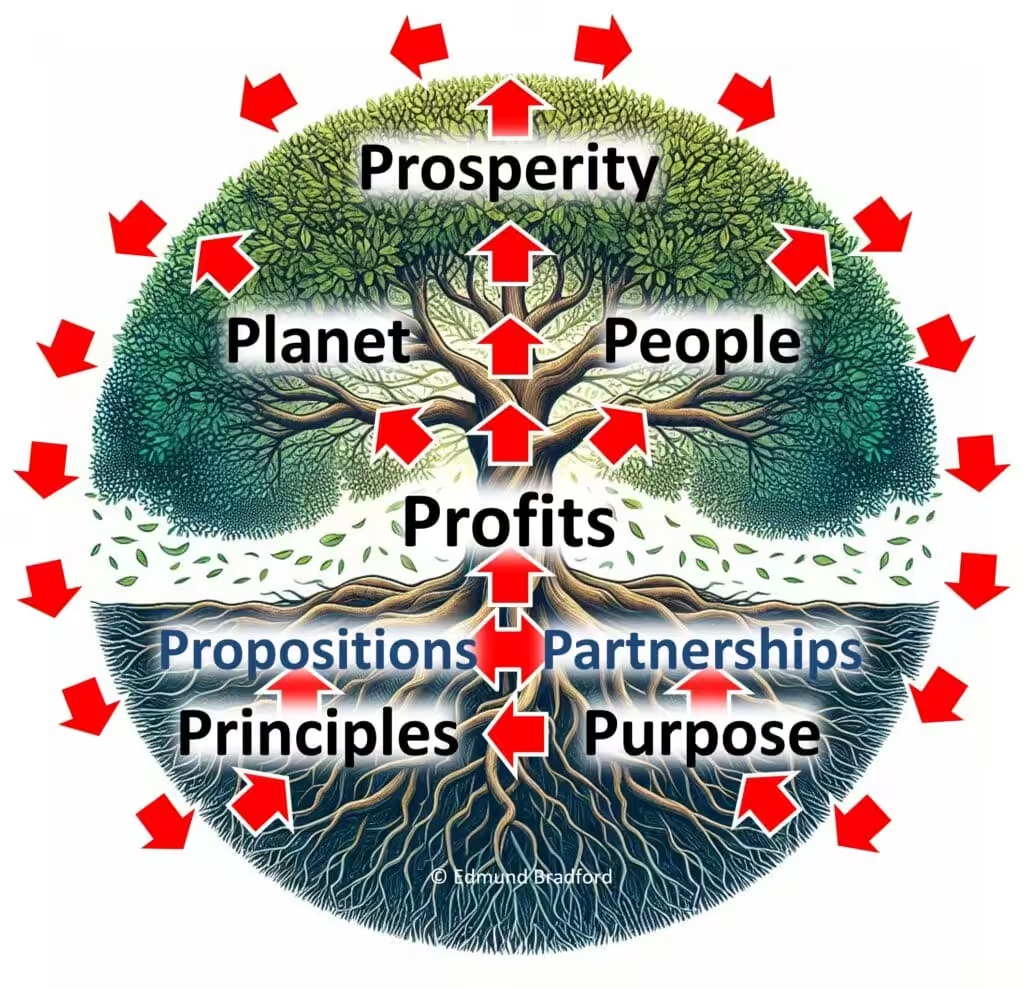
The model has 4 roots (or drivers) of sustainable business growth and 4 outcomes. Good strong sustainable roots lead to good sustainable growth outcomes.
The 4 roots are:
The 4 outcomes are:
Indeed, there is a long history of thinking about an organization as a living organism and I can recommend ‘The Business Tree’ book by Hank Moore (1).
Fit with other standard growth frameworks
There are hundreds of strategic growth frameworks in use by businesses and academics today. However, they often focus on delivering more financial growth for the firm, especially around delivering better revenue growth and profitable growth. The 8P Model adds to these frameworks by helping leaders think about broader sustainable growth. The model should therefore be seen as complementary to, rather than competing with, these frameworks.
Fit with the UN standard frameworks
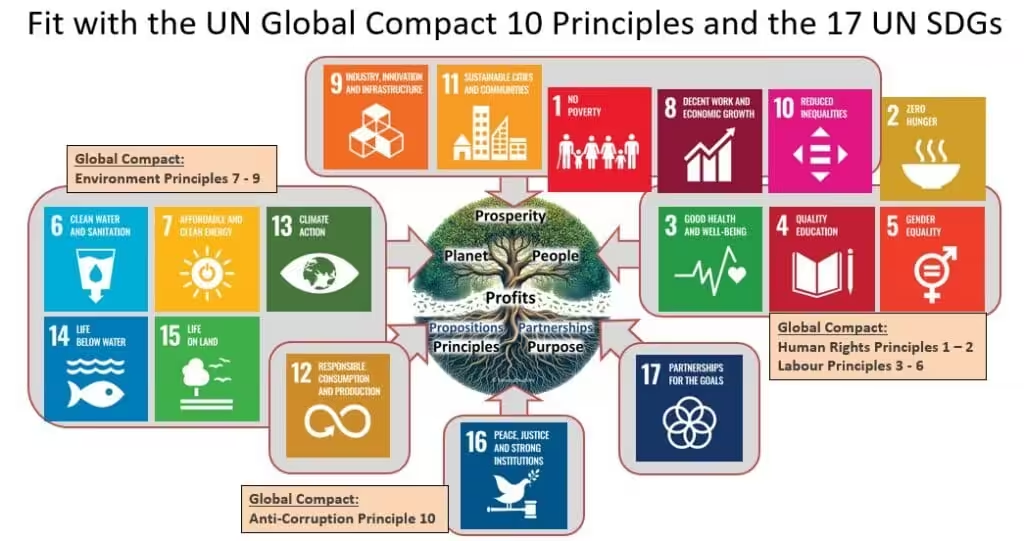
The 8P Model covers all 17 of the UN Sustainable Development Goals (SDGs) and all 9 of the UN Global Compact principles. As such, it acts as a useful way of codifying these and connecting to the universal UN-based language of sustainability.
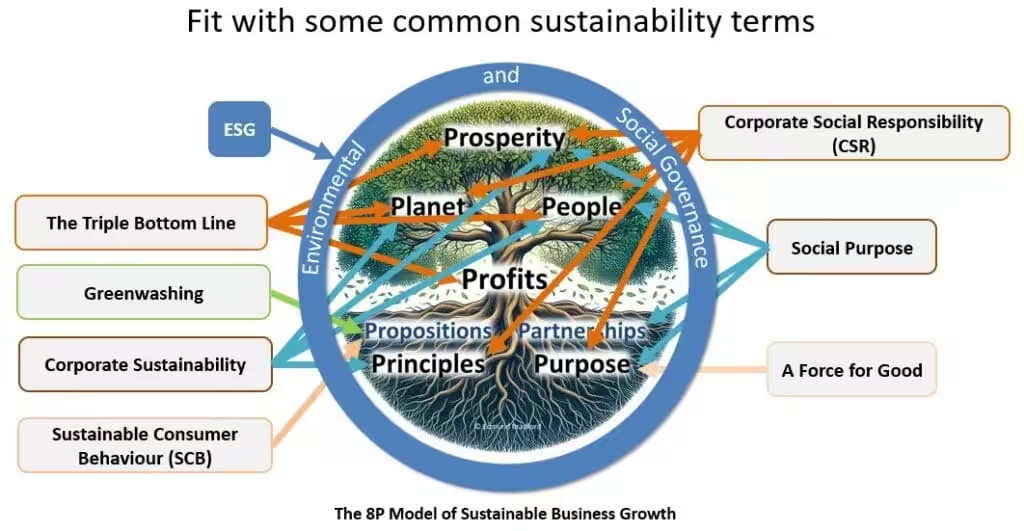
Using it to understand common sustainability terms
The 8P Model can also be used to understand how common sustainability terms apply to business growth. In this case, we have added Environmental and Social Governance (ESG) as an outer ring to symbolize that ESG is concerned primarily with measuring progress across all areas.
Using it to define sustainable business growth
The model emphasizes that for a business to grow sustainably, it should be rooted in:
Which deliver:
The desired system of sustainable growth
To grow sustainably, a business should improve its sustainable growth system.
The system starts with the firm’s stated Purpose. Which drives its Governance Principles, and Partnerships both internally and externally. Its Purpose, Principles and Partnerships drive its value Propositions to customers. These form the roots of the firms commercial success and drive its Profits. Healthy, profitable firms can then re-invest in programs and innovations that improve the Planet, its People and broader Prosperity. This then provides better resources for the firm, more spending power, economies of scale and feeds the roots of the firm, enabling it to grow sustainably.
Expanding the thinking to an industry level
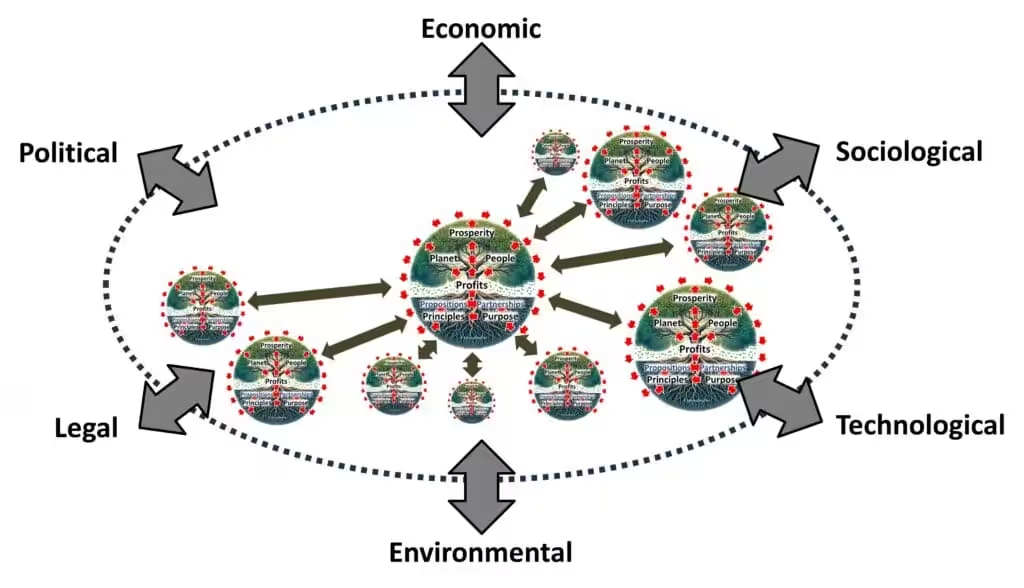
Thinking of a single business as a tree also helps us to understand how a whole industry or multiple businesses should grow sustainably. An industry is a collection of business trees where they interact with each other, like trees in a forest. Like trees, businesses can work together to share resources and improve their collective health. Indeed, there is much research to suggest that trees are social organisms that share resources.
This is a much more sustainably-friendly way of thinking about business and is very different to simply focusing on the P&L.
Of course, this can be expanded to think about multiple industries where each industrial forest has different sustainability challenges, solutions, health and trends. All these industries are connected into one global system which is, itself, impacted by macro-economic political, economic, sociological, technological, environmental and legal forces. Industries also influence these forces by their lobbying, tax payments, marketing, innovation, environmental practices and legal choices.
In Summary
A business is not isolated from the world. It is connected to it through its resource inputs and its social and environmental outputs. The 8P Model helps business leaders to understand this, to model it, measure it, communicate it and become a better force-for-good in the world.
As Porter and Derry wrote: “For businesses, this means that sustainability focuses on the organization’s interrelationships with the human systems in which it is embedded—stakeholders, government, rival firms and industries, as well as its interplay with natural systems, such as natural resources, ecospheric capacity, and the environmental effects of industrial waste.” (2)
References
(1) Moore, H. (2010) The business tree: growth strategies and tactics for surviving and thriving. Warwick, NY: New Page Books
(2) Porter, T. and Derry, R., 2024. Sustainability and business in a complex world. Business and Society Review, 117(1), pp.33–53.